

 All of us deserve to be able to care for our loved ones, but challenges at work can get in the way. WorkLife Law’s helpline and tools are here to help you understand your rights and options.
This page gives information about caregivers’ legal rights to take time off work and to be free from harassment and discrimination.
Who is a family caregiver?
If you give care to a family member who is aging, disabled, or a child, you are a family caregiver. Examples of caregiving include helping a family member by cooking for them, feeding them, helping them bathe, giving emotional support, keeping them safe, shopping for them, making doctor’s appointments, driving them to appointments, or being with them during medical care visits. While laws often have their own definitions of who is covered as a family member, caregivers can include parents, siblings, spouses, children, and chosen family.
What does caregiver discrimination look like?
If you feel you are being treated worse at work because of your family responsibilities, you may be experiencing caregiver discrimination. Watch this video for examples of family caregiver discrimination, as read by the WorkLife Law team. Text version available here.
 Do I have discrimination or harassment protections at work?
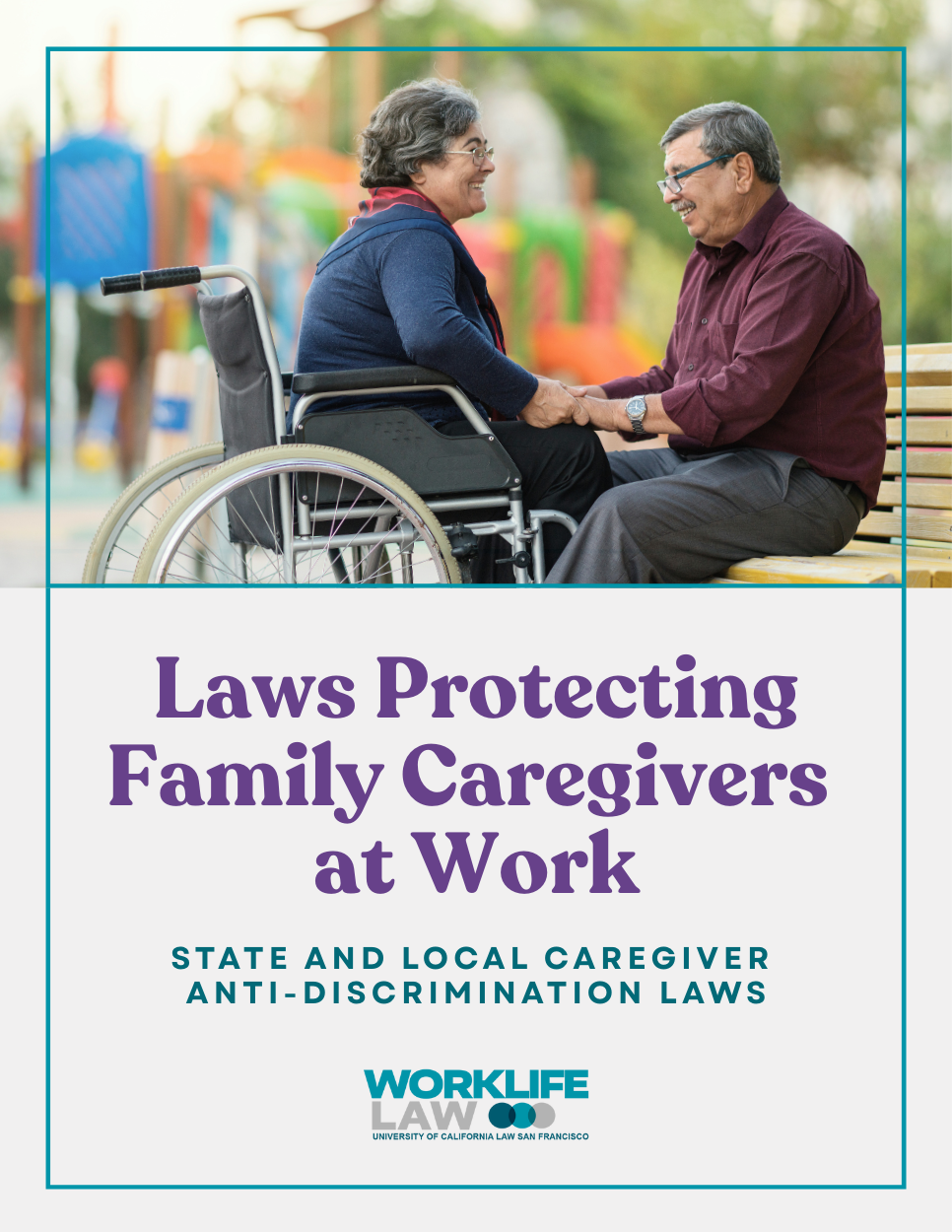
There is a mix of laws that protect family caregivers from discrimination at work. For example, it is illegal under the Americans with Disabilities Act and many state laws for your employer to fire, harass, or penalize you because of your relationship with someone who has a disability. The legal definition of a disability is broad and includes conditions such as cancer, asthma, arthritis, depression, anxiety, dementia, autoimmune diseases, diabetes, mobility impairments, and many other common medical conditions.
In addition, depending on where you work, you may be protected by laws that directly ban discrimination against caregivers, including caregivers for people without disabilities. Read our summary of local, state, and federal laws that protect family caregivers here.
Do I have a right to take time off work for caregiving?
FMLA Job-protected Time Off
Under the national Family and Medical Leave Act (FMLA), many employees have a right to time off work when needed to care for an immediate family member who has a serious health condition, caring for a new child, or due to their own serious health condition or pregnancy.
If you have trouble accessing the leave that you need to care for a loved one, please contact us for assistance.
Learn more about the FMLA
Paid Family Leave
Paid family and medical leave programs allow employees to receive pay while they are out of work to care for a family member with a serious health condition. Paid family and medical leave is also available to take time off for your own health condition (including pregnancy and related conditions) and to bond with a new child, including adoptive and fostered children. For the most part, these programs are run by a state agency and are funded by employee and/or employer taxes.
Keep in mind that an employee who is receiving paid family and medical leave benefits does not always have a right to return to their job following their time off. While some state paid family and medical leave programs include job protection, a few programs provide only pay (wage replacement), not job protection (the right to have your job back after the leave ends). Employees may have a right to return to the job under other laws such as the federal Family Medical Leave Act (FMLA), the Pregnant Workers Fairness Act (PWFA), or similar state laws.
As of 2025, paid family and medical leave is available in:
- California
- Colorado
- Connecticut
- Maryland (benefits available Jan 1, 2026)
- Massachusetts
- Minnesota (benefits available Jan 1, 2026)
- New Jersey
- New York
- Oregon
- Rhode Island
- Washington
- Washington, D.C.
If you have questions about the laws in your state, contact WorkLife Law’s legal helpline for free and confidential assistance.
Paid Sick Days
Many states and localities have laws that require employers to provide paid sick days for their workers. These laws can often be used to get a few days of time off to care for a family member. Many state or local sick day laws don’t have requirements to submit doctor’s notes.
Learn more at the National Partnership for Working Families website.
Where do I go for help?
If you think that you may have experienced discrimination because of family caregiving, pregnancy, or lactation, or if you would like to learn more about your legal rights, contact our free legal helpline. We also provide support in accessing FMLA leave or paid family leave.
- Email hotline@worklifelaw.org
- Call 415-703-8276 and leave a message with your phone number. We will call you back.
- Fill out the form at the bottom of the page: https://worklifelaw.org/get-help